
Conocimiento y práctica
Mostrando entradas con la etiqueta arte marcial. Mostrar todas las entradas
Mostrando entradas con la etiqueta arte marcial. Mostrar todas las entradas
domingo, 11 de agosto de 2019


miércoles, 15 de mayo de 2019
koshi waza in Aikido
Koshi waza: técnicas de cadera. Hip techniques.
O‐goshi, Uki‐goshi, Koshi‐guruma, Surubi goshi, Koshi nage.
Budo Shin Dojo: https://marianogiacobone.wixsite.com/budoshin
domingo, 12 de mayo de 2019

jueves, 25 de abril de 2019
Powerful Techniques II
Seoi otoshi / nage and Tai otoshi, different styles and variations.
Seoi otoshi/nage y Tai otoshi, diferentes estilos y variaciones.
domingo, 21 de abril de 2019
Spirited Aikido
Técnicas para ataques en corta distancia y Tanto dori.
Techniques for attacks in short distance and Tanto dori.
domingo, 7 de abril de 2019
Maestros del Aikido
Aikido Masters
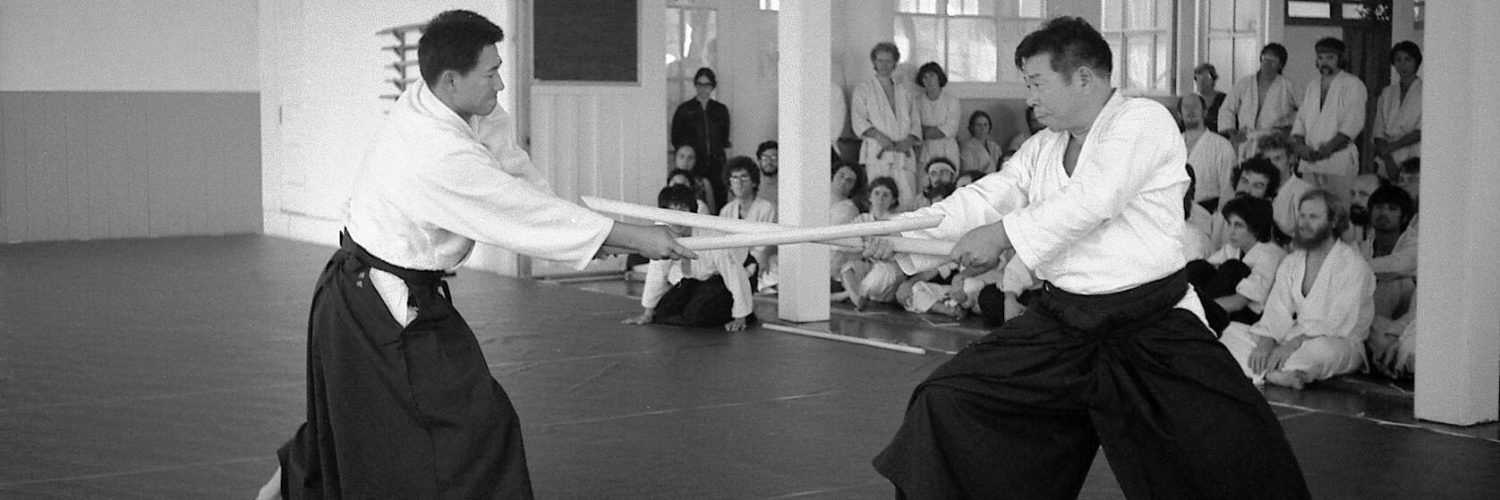
Saotome sensei & Kobayashi sensei showing their art in the mid-80s
martes, 2 de abril de 2019
miércoles, 27 de marzo de 2019
martes, 12 de febrero de 2019
Practica de Aikido

"The warrior´s way"
courage - sincerity - compassion - wisdom - courtesy - honor - loyalty.
Spirit of Martial Art.
Budo Shin Aikido: Daily practice.
lunes, 11 de febrero de 2019
Saito sensei - 12 Jo dori
Saito sensei muestra técnicas contra ataques de bastón (jo dori)
Saito sensei shows techniques against staff attacks (jo dori).
Saito sensei montre des techniques contre les attaques de bâton (jo dori).
Saito Sensei mostra tecniche contro gli attacchi di bastone (jo dori).

sábado, 2 de febrero de 2019
lunes, 28 de enero de 2019
El Aikido de Nishio sensei
Nishio sensei mostrando su arte a mediados de los ´80.
Nishio sensei showing his art in the mid-80s.
Nishio sensei montre son art au milieu des années 80.

lunes, 21 de enero de 2019
Katadori waza - Kokyu nage
Katadori kokyu nage mostrado por diferentes maestros.
Katadori kokyu nage shown by different masters.
Katadori kokyu nage von verschiedenen Meisters gezeigt.
Katadori kokyu nage montré par différents maîtres.
lunes, 14 de enero de 2019
Uki otoshi
Uki Otoshi significa caída flotante. Se puede observar las diferencias entre Judo y Aikido, aunque el principio es el mismo.
Uki Otoshi means floating fall. You can see the differences between Judo and Aikido, although the principle is the same.

viernes, 4 de enero de 2019
Práctica de Aikido

Práctica cotidiana - Daily practice
Horario de verano - Summer schedule
Lunes 8 - 9.30 hs.
Martes 8 - 9.30 hs.
Miércoles 18 - 19.30 hs.
Jueves 8 - 9.30 hs.
Viernes 18 - 19.30 hs.
Sábado 8 - 9.30 hs.
domingo, 23 de diciembre de 2018
Morote tori Kokyuho
Diferentes estilos y variaciones por grandes maestros del Aikido.
Verschiedene Stile und Variationen von großen Aikido-Meistern.
Différents styles et variations par des grands maîtres de l'Aïkido.
Different styles and variations by great masters of Aikido.
jueves, 1 de noviembre de 2018
KAMAE: Postura y actitud

por sensei Masafumi Sakanashi
English version at bottom.
"El Kamae en las artes marciales, implica la actitud de guardia a partir de la cual una persona enfrenta una determinada situación.
En Aikido, se usa el Kamae con una mano arriba y la otra abajo, pero en lo que hace a la actitud que subyace detrás del Kamae, es el enfoque en el cual uno esta espiritualmente centrado y sereno, alerta frente a la situación.
Entonces, puede hablarse de un Kamae natural, que en Aikido es la posición Shizentai o postura natural, estando de pie. Pero como siempre se dice en relación a las técnicas de Aikido, lo interesante radica en ver como se trasladan esos conceptos a la vida cotidiana, fuera del ámbito del Dojo. Entonces uno puede ver si enfrenta las situaciones, los desafíos de la vida le presenta con un Kamae correcto, entendiendo por Kamae no solo la guardia, sino también la postura en todo el sentido que ello implica, internamente, el Kamae es la postura con que uno se enfrenta al mundo y la posición del cuerpo es la expresión externa de esa persona.
La actitud siempre es fundamental ante los conflictos y es común que los japoneses le pregunten a una persona que Kamae tiene con tal o cual asunto. El Kamae está íntimamente relacionado con el Ma-ai, la distancia, factor esencial a la hora del combate, porque Ma-.ai y Kamae interactúan en forma constante.
El Kamae es un elemento espiritual, y el Ma-ai es el “hasta donde se puede ver un determinado problema”.
En cuanto a la mirada, en Aikido se aprende a mirarse a uno mismo pero a la hora de resolver una situación de defensa personal, la cuestión pasa por tener una mirada global, que sin fijarse en ningún punto en particular del rival, permita ver su actitud general, “leyendo” su intención” y el manejo de respiración de ese rival.
Más allá de la técnica, el anticipo a la acción del oponente, pudiendo predecir que movimiento tendrá su Ki es un aspecto central del entrenamiento."
KAMAE
Posture and attitude:
"The Kamae in martial arts, implies the attitude of guard from which a person faces a certain situation.
In Aikido, the Kamae is used with one hand up and the other down, but as far as the attitude underlying the Kamae is concerned, it is the focus in which one is spiritually focused and calm, alert to the situation.
Then, we can speak of a natural Kamae, which in Aikido is the Shizentai position or natural posture, standing. But as it is always said in relation to Aikido techniques, the interesting thing is to see how these concepts are transferred to everyday life, outside the scope of the Dojo.
Then one can see if he faces the situations, the challenges of life presents him with a correct Kamae, understanding by Kamae not only the guard, but also the posture in all the sense that implies, internally, the Kamae is the posture with which one faces the world and the position of the body is the external expression of that person.
The attitude is always fundamental in the face of conflicts and it is common for the Japanese to ask a person that Kamae has with this or that matter. The Kamae is intimately related to Ma-ai, distance, an essential factor at the time of combat because Ma-.ai and Kamae interact constantly.
The Kamae is a spiritual element, and the Ma-ai is the "as far as a certain problem can be seen".
Regarding the look, in Aikido you learn to look at yourself but when solving a situation of self-defense, the question is to have a global view, which without looking at any particular point of the opponent, allows you to see your general attitude, "reading" his intention "and the breathing management of that rival.
Beyond the technique, the advance to the action of the opponent, being able to predict which movement will have its Ki is a central aspect of the training. "
KAMAE
Posture and attitude:
"The Kamae in martial arts, implies the attitude of guard from which a person faces a certain situation.
In Aikido, the Kamae is used with one hand up and the other down, but as far as the attitude underlying the Kamae is concerned, it is the focus in which one is spiritually focused and calm, alert to the situation.
Then, we can speak of a natural Kamae, which in Aikido is the Shizentai position or natural posture, standing. But as it is always said in relation to Aikido techniques, the interesting thing is to see how these concepts are transferred to everyday life, outside the scope of the Dojo.
Then one can see if he faces the situations, the challenges of life presents him with a correct Kamae, understanding by Kamae not only the guard, but also the posture in all the sense that implies, internally, the Kamae is the posture with which one faces the world and the position of the body is the external expression of that person.
The attitude is always fundamental in the face of conflicts and it is common for the Japanese to ask a person that Kamae has with this or that matter. The Kamae is intimately related to Ma-ai, distance, an essential factor at the time of combat because Ma-.ai and Kamae interact constantly.
The Kamae is a spiritual element, and the Ma-ai is the "as far as a certain problem can be seen".
Regarding the look, in Aikido you learn to look at yourself but when solving a situation of self-defense, the question is to have a global view, which without looking at any particular point of the opponent, allows you to see your general attitude, "reading" his intention "and the breathing management of that rival.
Beyond the technique, the advance to the action of the opponent, being able to predict which movement will have its Ki is a central aspect of the training. "


domingo, 3 de diciembre de 2017
Clase de Aikido en Budo Shin
Instructor: sensei Giacobone

Escuela Budo Shin
武 道心流
sábado, 25 de noviembre de 2017
Como ser un buen Uke en Aikido
How to be a good Uke in Aikido
(English version at bottom)
por Giacobone sensei

Uke es el atacante, y su ataque puede ser un golpe, un agarre u otra intención de ataque.
Nage o Tori es el defensor, el que ejecuta una técnica para neutralizar el ataque. Las técnicas pueden ser proyecciones o inmovilizaciones, y en los niveles más avanzados combinaciones dinámicas de ambas (henka waza).
La mitad del entrenamiento (keiko) en Aikido consiste en ser Uke. La calidad del Uke determina la calidad de la práctica.
En la práctica del Aikido, el buen logro de una técnica es el resultado, no sólo del movimiento de Nage, sino de una labor conjunta entre Nage y Uke. La precisión y eficacia no se logran en un intento, sino luego de un montón de repeticiones y a lo largo de la práctica. Nage hace la técnica, Uke responde con suavidad, y así una y otra vez. De esta manera Nage avanzará poco a poco hasta logar hacer el movimiento ideal.
En Aikido aprendemos a caer, las caídas son fundamentales, por eso el principiante debe acostumbrarse a ser lanzado. A veces, sobretodo al principio, no es una experiencia agradable ser derribado por alguien y caer, pero es necesario aprender a disfrutarlo para poder continuar con la práctica.
Para esto, Nage debe tener cuidado de lanzar al principiante con cuidado, respetando sus posibilidades. El instructor tiene que observar el comportamiento de los estudiantes cuidadosamente, y si este llega a ser peligroso, debe corregir de forma adecuada. La responsabilidad del instructor en este punto es muy importante.

Para el principiante, es importante recordar el movimiento de las técnicas tan
pronto como sea posible, para esto es esencal su mentalidad. La mentalidad es
la clave en el arte marcial, podemos decir que es una combinación entre corazón
y determinación, entre disfrute y disciplina.
Cuando se le explica como debe caer, el principiante no puede entender por qué es necesario caer de esta o aquella forma. Cuando se empieza a entender la relación entre la caída y la técnica, entonces es fácil de adivinar qué tipo de ukemi (caida) es el que se necesita. "Caer por caer" no ayuda en los progresos de la técnica de ukemi.
A medida que progresan los entrenamientos, uno se va acostumbrando a diferentes compañeros, diferentes uke, diferentes nage. Diferencias de tamaño, de sexo, de experiencia, etc., cuya fuerza y velocidad serán distintas.

Uke debe aprender a armonizarse con el movimiento de Nage, sin bloquearlo, sin resistirse pero tampoco con una actitud displicente o fácil. El ataque debe ser sincero, sin intención pero fuerte.


Cuando se le explica como debe caer, el principiante no puede entender por qué es necesario caer de esta o aquella forma. Cuando se empieza a entender la relación entre la caída y la técnica, entonces es fácil de adivinar qué tipo de ukemi (caida) es el que se necesita. "Caer por caer" no ayuda en los progresos de la técnica de ukemi.
A medida que progresan los entrenamientos, uno se va acostumbrando a diferentes compañeros, diferentes uke, diferentes nage. Diferencias de tamaño, de sexo, de experiencia, etc., cuya fuerza y velocidad serán distintas.

Debido a que Uke no puede existir sin el movimiento de Nage, Uke debe moverse sin bloquear ni fingir el movimiento. Uke debe adaptar su movimiento a cada ocasión.Todo esto se relaciona con el método que se use en la práctica. La práctica no será buena si Uke intenta aferrarse demasiado, puesto que en Aikido practicamos técnicas predefinidas, el movimiento siguiente siempre es conocido y esto hace fácil bloquear. Esto no conduce a un buen progreso a menos que su objetivo sea hacer frente y derribar, pero para adquirir un buen movimiento de Aikido esto no funciona.
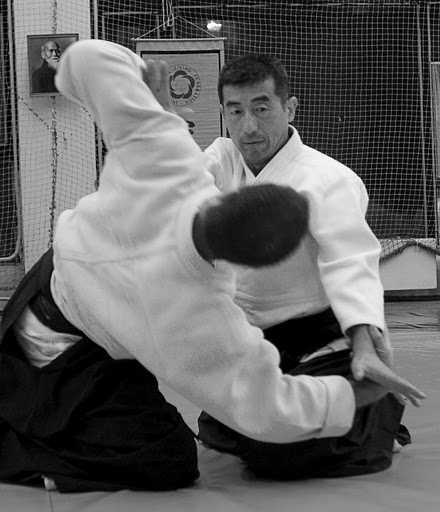
El Uke ideal es aquel que siente todo, reacciona y se pone en movimiento con la cantidad apropiada de fuerza (energía) y permanece en conexión con su compañero y el entorno. Suele mantener una actitud correcta hacia si mismo y hacia los demás. Es algo que irradia de su ser de forma natural, y es fruto de su práctica permanente y su dedicación. El Uke ideal valora y respeta el tiempo del compañero tanto como el propio. Sus acciones son sinceras, pero sobre todo, es honrado consigo mismo.
En efecto, al efectuar sus ataques o agarres de una manera realista, el Uke le brinda a Nage todo lo que este necesita, o sea, un ataque correcto, que, a su vez, demanda una reacción asimismo correcta y adecuada para completar las técnicas requeridas. Este es el aprendizaje de la armonía y la conexión. No hay lucha ni confrontación, no hay competición. Los practicantes se ayudan mutuamente a progresar.

En efecto, al efectuar sus ataques o agarres de una manera realista, el Uke le brinda a Nage todo lo que este necesita, o sea, un ataque correcto, que, a su vez, demanda una reacción asimismo correcta y adecuada para completar las técnicas requeridas. Este es el aprendizaje de la armonía y la conexión. No hay lucha ni confrontación, no hay competición. Los practicantes se ayudan mutuamente a progresar.

Puntos importantes para ser un buen Uke
Sujetar a Nage o atacarlo con golpes o movimientos de corte son maniobras ofensivas. Nage no puede bloquear un ataque si no hay nada que bloquear y un golpe o corte que no llega a la cabeza o al cuerpo es una tontería.
Al momento de atacar en necesario ser firme y mantener una buena postura. No hay manera de empezar a atacar con una distancia inadecuada, una mala sincronía o en una posición de desequilibrio.
Uke debe caer por la fuerza de Nage. No haga Ukemi (caída) sin sentir la fuerza de Nage.
2. Al sujetar la mano utilizar todos los dedos.
Un agarre que solo use el pulgar y el índice se romperá con facilidad. Uke debe agarrar con firmeza con toda su mano, así el movimiento de nage no romperá el agarre y Uke se moverá siguiéndolo.
3. No cambiar la fuerza de sujeción durante la técnica
Cuando Nage se está moviendo durante la técnica, y Uke cambia la fuerza de sujeción, el movimiento de Nage es perturbado. Puede mantenerla fuerte o suave, pero mantenga la misma dirección con la fuerza y siga el movimiento del Nage. Si cambia la fuerza de sujeción, no sólo perturbará el movimiento de Nage, sino también su propia capacidad para reaccionar a la técnica.
4. Recibir el movimiento con todo el cuerpo.
No se debe detener el movimiento centrando la fuerza en el hombro o el brazo. A menudo veo, en el caso de Katate-Dori o Ryote-Dori, a la gente reducir el movimiento al codo o la muñeca. Se debe transmitir la fuerza desde el punto de contacto a todo el cuerpo. Aunque su cuerpo sea más grande que el de Nage se debe recibir la fuerza con todo el cuerpo.
5. Mantener el contacto visual con el punto de sujeción de Nage.
Cuando se es Uke se debe procurar mantener el punto de contacto de las manos con Nage delante de los ojos. No mirándolo directamente sino manteniéndolo dentro del campo visual. Si la cabeza no apunta al lugar correcto quiere decir que no se está en guardia y esto no es marcial. Si la mirada se fija en la dirección de la caída seguramente la adelantaremos y nos estaremos tirando sin esperar la proyección, en cambio si la mirada busca el punto de contacto con Nage el centro del cuerpo la seguirá.
6. No ser un Uke perezoso.
Ser Uke perezoso significa, por ejemplo, hacer de Uke para Shiho-nage pensando de antemano en el Shiho-nage y moverse por sí mismo, y no por la fuerza de Nage. En ese caso, si Nage cambia la técnica Uke no puede seguir. No sea un Uke perezoso en ningún caso. No ser un perezoso lo ayudará a pulir su sentimiento.
Ser Uke perezoso significa, por ejemplo, hacer de Uke para Shiho-nage pensando de antemano en el Shiho-nage y moverse por sí mismo, y no por la fuerza de Nage. En ese caso, si Nage cambia la técnica Uke no puede seguir. No sea un Uke perezoso en ningún caso. No ser un perezoso lo ayudará a pulir su sentimiento.
English version
As Aikido is an art of harmony and connection, it is practiced with un partner, one that performs the attack and the other that performs the technique, alternating roles after certain repetitions.
Uke is the attacker, and his attack can be a stroke, a grip or another attack intention.
Nage or Tori is the defender, who executes a technique to neutralize the attack. The techniques can be projections or immobilizations, and in the most advanced levels dynamic combinations of both (henka waza).
Half of the training (keiko) in Aikido consists of being Uke. The quality of Uke determines the quality of the practice.
In the practice of Aikido, the good achievement of a technique is the result, not only of Nage's movement, but of a combined work between Nage and Uke. The precision and effectiveness are not achieved in an attempt, but after a lot of repetitions and throughout the practice. Nage does the technique, Uke responds gently, and so on again and again. In this way, Nage will advance little by little until the ideal movement is achieved.
In Aikido we learn to fall, falls are fundamental, so the beginner must get used to being thrown. Sometimes, especially at the beginning, it is not a pleasant experience to be knocked down by someone and to fall, but it is necessary to learn to enjoy it in order to continue with the practice.
For this, Nage must be careful to throw the beginner with care, respecting his possibilities. The instructor has to observe the behavior of the students carefully, and if it becomes dangerous, he must correct it in an appropriate way. The responsibility of the instructor at this point is very important.
For the beginner, it is important to remember the movement of the techniques as soon as possible, for this is esencal his mentality. The mentality is the key in the martial art, we can say that it is a combination between heart and determination, between enjoyment and discipline.
When it is explained how it should fall, the beginner can not understand why it is necessary to fall in this or that form. When you begin to understand the relationship between falling and technique, then it is easy to guess what kind of ukemi (fall) is what is needed. "Falling just to fall" does not help in the progress of the technique of ukemi.
As the workouts progress, one becomes accustomed to different partners, different uke, different nage. Differences in size, sex, experience, etc., whose strength and speed will be different.
Because Uke can not exist without Nage's movement, Uke must move without blocking or pretending movement. Uke must adapt his movement to every occasion. All this is related to the method that is used in practice. The practice will not be good if Uke tries to cling too much, since in Aikido we practice predefined techniques, the following movement is always known and this makes it easy to block. This does not lead to good progress unless your goal is to face and shoot down, but to acquire a good movement of Aikido this does not work.
Uke must learn to harmonize with the movement of Nage, without blocking it, without resisting, but not with a cavalier or easy attitude. The attack must be sincere, unintentional but strong.
A skilled practitioner can learn several techniques in a day, but only the procedure of doing it. Even if you know the procedure of a technique, you will not know the feeling and the correct feeling of it without being uke. Accumulating experience with experienced Toris and beginners, you learn to feel like Uke, when a technique was well executed and when not. Being a firm but respectful Uke brings out the best in each nage. In this way, if Uke learns to feel when a technique was well executed, he will try to do it this way when he must be Nage. The repetition and accumulation of these processes must be the essence of daily practice.
The ideal Uke is one who feels everything, reacts and sets in motion with the appropriate amount of force (energy) and remains in connection with his partner and the environment. He usually maintains a correct attitude towards himself and towards others. It is something that radiates from your being in a natural way, and is the fruit of your permanent practice and your dedication. The ideal Uke values and respects the partner's time as much as his own. His actions are sincere, but above all, he is honest with himself.
In fact, when performing his attacks or grabs in a realistic manner, Uke gives Nage everything it needs, that is, a correct attack, which, in turn, demands a correct and adequate reaction to complete the techniques. required. This is the learning of harmony and connection. There is no struggle or confrontation, there is no competition. Practitioners help each other to progress.
Important points to be a good Uke by Shoji SEKI shihan
1. Uke is the offensive part.
Holding Nage or attacking him with blows or cutting movements are offensive maneuvers. Nage can not block an attack if there is nothing to block and a blow or cut that does not reach the head or body is foolish.
When attacking, it is necessary to be firm and maintain a good posture. There is no way to start attacking with an inadequate distance, a bad synchrony or in an unbalanced position.
Uke must fall by force of Nage. Do not do Ukemi (fall) without feeling Nage's strength.
2. When holding the hand, use all the fingers.
A grip that only uses the thumb and forefinger will break easily. Uke must grip firmly with his whole hand, so the nage movement will not break the grip and Uke will move following him.
3. Do not change the clamping force during technique
When Nage is moving during the technique, and Uke changes the clamping force, Nage's movement is disturbed. You can keep it strong or soft, but keep the same direction with the force and follow the movement of the Nage. If you change the clamping force, it will not only disturb Nage's movement, but also your own ability to react to the technique.
4. Receive the movement with the whole body.
The movement should not be stopped by focusing the force on the shoulder or arm. I often see, in the case of Katate-Dori or Ryote-Dori, people reducing movement to the elbow or wrist. The force must be transmitted from the point of contact to the whole body. Even though his body is bigger than Nage's, strength must be received with the whole body.
5. Maintain eye contact with Nage's attachment point.
When you are Uke you should try to keep the point of contact of your hands with Nage in front of your eyes. Not looking at it directly but keeping it within the visual field. If the head does not point to the right place it means that you are not on guard and this is not martial. If the gaze is fixed in the direction of the fall we will surely advance it and we will be pulling without waiting for the projection, instead if the look seeks the point of contact with Nage the center of the body will follow it.
6. Do not be a lazy Uke.
Being lazy Uke means, for example, playing Uke for Shiho-nage thinking in advance of the Shiho-nage and moving by himself, and not by Nage's strength. In that case, if Nage changes the technique Uke can not continue. Do not be a lazy Uke in any case. Not being a lazy will help you polish your feeling.
Uke is the attacker, and his attack can be a stroke, a grip or another attack intention.
Nage or Tori is the defender, who executes a technique to neutralize the attack. The techniques can be projections or immobilizations, and in the most advanced levels dynamic combinations of both (henka waza).
Half of the training (keiko) in Aikido consists of being Uke. The quality of Uke determines the quality of the practice.
In the practice of Aikido, the good achievement of a technique is the result, not only of Nage's movement, but of a combined work between Nage and Uke. The precision and effectiveness are not achieved in an attempt, but after a lot of repetitions and throughout the practice. Nage does the technique, Uke responds gently, and so on again and again. In this way, Nage will advance little by little until the ideal movement is achieved.
In Aikido we learn to fall, falls are fundamental, so the beginner must get used to being thrown. Sometimes, especially at the beginning, it is not a pleasant experience to be knocked down by someone and to fall, but it is necessary to learn to enjoy it in order to continue with the practice.
For this, Nage must be careful to throw the beginner with care, respecting his possibilities. The instructor has to observe the behavior of the students carefully, and if it becomes dangerous, he must correct it in an appropriate way. The responsibility of the instructor at this point is very important.
For the beginner, it is important to remember the movement of the techniques as soon as possible, for this is esencal his mentality. The mentality is the key in the martial art, we can say that it is a combination between heart and determination, between enjoyment and discipline.
When it is explained how it should fall, the beginner can not understand why it is necessary to fall in this or that form. When you begin to understand the relationship between falling and technique, then it is easy to guess what kind of ukemi (fall) is what is needed. "Falling just to fall" does not help in the progress of the technique of ukemi.
As the workouts progress, one becomes accustomed to different partners, different uke, different nage. Differences in size, sex, experience, etc., whose strength and speed will be different.
Because Uke can not exist without Nage's movement, Uke must move without blocking or pretending movement. Uke must adapt his movement to every occasion. All this is related to the method that is used in practice. The practice will not be good if Uke tries to cling too much, since in Aikido we practice predefined techniques, the following movement is always known and this makes it easy to block. This does not lead to good progress unless your goal is to face and shoot down, but to acquire a good movement of Aikido this does not work.
Uke must learn to harmonize with the movement of Nage, without blocking it, without resisting, but not with a cavalier or easy attitude. The attack must be sincere, unintentional but strong.
A skilled practitioner can learn several techniques in a day, but only the procedure of doing it. Even if you know the procedure of a technique, you will not know the feeling and the correct feeling of it without being uke. Accumulating experience with experienced Toris and beginners, you learn to feel like Uke, when a technique was well executed and when not. Being a firm but respectful Uke brings out the best in each nage. In this way, if Uke learns to feel when a technique was well executed, he will try to do it this way when he must be Nage. The repetition and accumulation of these processes must be the essence of daily practice.
The ideal Uke is one who feels everything, reacts and sets in motion with the appropriate amount of force (energy) and remains in connection with his partner and the environment. He usually maintains a correct attitude towards himself and towards others. It is something that radiates from your being in a natural way, and is the fruit of your permanent practice and your dedication. The ideal Uke values and respects the partner's time as much as his own. His actions are sincere, but above all, he is honest with himself.
In fact, when performing his attacks or grabs in a realistic manner, Uke gives Nage everything it needs, that is, a correct attack, which, in turn, demands a correct and adequate reaction to complete the techniques. required. This is the learning of harmony and connection. There is no struggle or confrontation, there is no competition. Practitioners help each other to progress.
By Giacobone sensei
1. Uke is the offensive part.
Holding Nage or attacking him with blows or cutting movements are offensive maneuvers. Nage can not block an attack if there is nothing to block and a blow or cut that does not reach the head or body is foolish.
When attacking, it is necessary to be firm and maintain a good posture. There is no way to start attacking with an inadequate distance, a bad synchrony or in an unbalanced position.
Uke must fall by force of Nage. Do not do Ukemi (fall) without feeling Nage's strength.
2. When holding the hand, use all the fingers.
A grip that only uses the thumb and forefinger will break easily. Uke must grip firmly with his whole hand, so the nage movement will not break the grip and Uke will move following him.
3. Do not change the clamping force during technique
When Nage is moving during the technique, and Uke changes the clamping force, Nage's movement is disturbed. You can keep it strong or soft, but keep the same direction with the force and follow the movement of the Nage. If you change the clamping force, it will not only disturb Nage's movement, but also your own ability to react to the technique.
4. Receive the movement with the whole body.
The movement should not be stopped by focusing the force on the shoulder or arm. I often see, in the case of Katate-Dori or Ryote-Dori, people reducing movement to the elbow or wrist. The force must be transmitted from the point of contact to the whole body. Even though his body is bigger than Nage's, strength must be received with the whole body.
5. Maintain eye contact with Nage's attachment point.
When you are Uke you should try to keep the point of contact of your hands with Nage in front of your eyes. Not looking at it directly but keeping it within the visual field. If the head does not point to the right place it means that you are not on guard and this is not martial. If the gaze is fixed in the direction of the fall we will surely advance it and we will be pulling without waiting for the projection, instead if the look seeks the point of contact with Nage the center of the body will follow it.
6. Do not be a lazy Uke.
Being lazy Uke means, for example, playing Uke for Shiho-nage thinking in advance of the Shiho-nage and moving by himself, and not by Nage's strength. In that case, if Nage changes the technique Uke can not continue. Do not be a lazy Uke in any case. Not being a lazy will help you polish your feeling.
 |
| Escuela Budo Shin AIKIDO |
domingo, 19 de noviembre de 2017
El Aikido y la Música

por Mariano Giacobone
Aikido y música comparten los mismos principios. ¿Cuáles son estos?
Armonía, ritmo y melodía…
Desde una perspectiva
general, la armonía es el equilibrio
de las proporciones entre las distintas partes de un todo, y su resultado
siempre connota belleza. En música, el estudio de la armonía implica los
acordes y su construcción, así como las progresiones de acordes y los
principios de conexión que los rigen.
El Ai, de Aikido,
significa armonía, y también unión, conexión. Es el camino de la armonía, de la
conexión con el orden universal.
Esta conexión, es la
esencia del Aikido.


En la música, la armonía
expresa belleza y equilibrio en el fluir de las notas y en la forma en que
estas se conectan y como se construyen los acordes y se combinan.
En el Aikido la armonía se
expresa en la unión, la conexión con el flujo de energía, expresada incluso
como un ataque o el movimiento de un adversario.
Armonía implica
equilibrio, un ajuste entre tensión y relajación, entre el tiempo y el espacio
(notas y silencios). No hay choques ni rupturas, nos conectamos con el
movimiento y nos volvemos uno con él.
En japonés se le llama musubi y es la clave del Aikido.
En japonés se le llama musubi y es la clave del Aikido.


En música, una melodía es una sucesión
de sonidos que es percibida como una sola entidad. Se desenvuelve en
una secuencia lineal, es decir a lo largo del tiempo, y tiene una
identidad y significado propio dentro de un entorno sonoro particular.
Podemos decir que una
melodía es una combinación de alturas y ritmo.
En las artes marciales
está representada por los katas o
formas, especialmente en el iaido y karate-do. El Aikido es diferente, no hay
formas fijas o katas, ya que de
acuerdo a su creador, el maestro Ueshiba, una forma fija, limita las
posibilidades y resta creatividad, sin embargo, en muchas escuelas de Aikido se
estudian y practican algunos movimientos predeterminados o formas, sobretodo
con armas, como el Jo (bastón corto) y bokken (sable de madera).


La estructura primordial
del universo es sonido y geometría: círculo (esferas, espirales),
triángulo (tetraedos), cuadrado (formas cúbicas).
La vibración es entonces una fuerza
fundamental del universo. La materia y la energía están en continuo
movimiento y vibran con una frecuencia definida formando patrones geométricos
de forma y sonido.
La naturaleza tiende a
vibrar en armonía (o a buscarla si se producen desequilibrios) desde las
partículas más pequeñas e invisibles hasta las más grandes.
La vibración genera
todo tipo de ondas que viajan en el espacio.
El sonido es
vibración.

Vivimos en un universo que
vibra, y nosotros vibramos con él, de hecho, somos esta vibración.
El cuerpo espiritual corresponde a una vibración sutil y
el cuerpo físico a una más grosera, o mejor dicho, menos sutil.
Cuando armonizamos con
esta vibración del universo, hay salud y felicidad. Equilibrio. Armonía.
Música.
Los pensamientos, las emociones, los sentidos, la actividad
celular, el impuso nervioso, el latido cardíaco, la respiración, el movimiento
del cuerpo: todas son formas de vibración.
La conciencia se mueve, rompiendo su equilibrio, para experimentar
y aprender y luego busca el equilibrio, volviendo a su centro, para comprender lo
experimentado y guardar memoria. Este movimiento de ida y vuelta, es lo que se
llama “intercambio rítmico balanceado”.
El ritmo es
fundamental, aporta orden y armonía, sin este orden la transmisión de energía e
información sería imposible.
El ritmo es movimiento sincronizado
Podemos entender al ritmo
como la repetición o patrón regular en el tiempo que puede aplicarse
a una amplia variedad de fenómenos naturales cíclicos que tienen una periodicidad o frecuencia.
El universo vibra y lo hace con ritmo y armonía
El corazón late con ritmo
Las ondas cerebrales tienen un ritmo
característico
El día y la noche presentan sus ritmos.
Todo lo que aparece, crece y se mueve
en la naturaleza tiene su ritmo propio.
El ritmo y la armonía de la vida
provienen del corazón
En el arte marcial el ritmo expresa la distancia y el tiempo,
frente a un adversario o durante la realización de una técnica o un kata. El tiempo (timming) y el espacio
(distancia o ma-ai) están
relacionados. Como todo movimiento, siendo una vibración en esencia, será
armonioso y equilibrado si tiene ritmo.
El Aikido se
caracteriza por sus movimientos circulares y su fluidez, alternando con
entradas directas u oblicuas, estableciendo un equilibrio y un ritmo natural,
influidos por la calma y la respiración, que permiten controlar cualquier
agresión o situación descontrolada.
Si te empujan, retrocede
Si tiran, avanza.
Moviéndote en círculos, entrando y
saliendo.
Vuélvete uno con la mente del
adversario, manteniendo tu calma y el equilibrio.
Y podrás controlar cualquier situación.
Cada ciclo de la naturaleza es un intercambio rítmico equilibrado de ida y vuelta entre pares de
condiciones opuestas.
En la práctica de Aikido, está representado por la relación entre
el ataque y la defensa, uke y nage (tori). Ya que se trabaja por parejas, el buen logro de una técnica será el resultado, no sólo del movimiento de nage, sino de una labor conjunta entre nage y uke (el que ataca y recibe la técnica).
La naturaleza está siempre trabajando en la construcción y la destrucción,
la creación y la aniquilación, manteniendo todas sus creaciones en movimiento,
girando y fluyendo, en un intercambio rítmico y balanceado,
vibrando de una hermosa forma en otra, manteniendo el orden y la armonía que crean la música eterna del universo.


Este es el principio fundamental del Aikido.
La ley de la armonía es el intercambio
equilibrado rítmico entre todas las cosas. Tras la ley de intercambio armónico,
todo este universo de reciprocidad está motivado con tanta precisión en su
equilibrio que los astrónomos, por ejemplo, pueden calcular las posiciones y
trayectorias de los planetas y estrellas con exactitud.
De la misma forma puedes sentir las vibraciones de la mente de tu
adversario y anticiparte a sus movimientos.
La música que podemos oír y conceptuar está
confinada dentro de los límites de nuestros sentidos físicos.
Por eso, para comprender la verdadera naturaleza de todas las cosas
y poder oír y entender su música, hay que trascender los límites
impuestos por los sentidos.
Para seguir el ritmo y la armonía de la
música cósmica debes sintonizarte con tus planos superiores y con la alta
frecuencia del amor incondicional
En la antigüedad, la ciencia y el arte no estaban separados. La
música, la matemática, la alquimia y la metafísica eran parte de un mismo conocimiento.

Los guerreros de antaño, y en particular el samurai, apreciaban la música y el arte y formaba parte de sus
vidas.

El ser humano de la actualidad ha perdido esta forma armoniosa y
natural de percibir al universo en el que vive.
La ciencia y la religión se encargaron de que así sucediera,
encerrando poco a poco a las personas en prisiones de percepción, de categorías
y prejuicios, creando una realidad material, carente de ritmo y armonía,
repleta de miedos y deseos. Una realidad fragmentada, sin conexión con la
naturaleza.
Lo que llamamos “ser humano” es una pobre imagen reducida,
fragmentada y desdibujada de lo que en verdad somos. Ya que no tiene en cuenta
al “ser espiritual” ni a su “cuerpo de energía”, olvida su unión esencial con
el universo y con todos los seres. Por eso carece de amor y sabiduría.
Esta es la paradoja del ser humano moderno, como hacer para
plasmar y realizar en su vida lo que no es humano, o mejor dicho, los planos de
existencia que están más allá de su percepción ordinaria y que no pueden ser
“objetivados” ni demostrados por la ciencia, por más avanzada que pretenda ser,
o por alguna tecnología.
¿Es posible trascender los límites de nuestra comprensión ordinaria
y sintonizarnos con nuestros planos superiores?
¿Como hacer para armonizar nuestra vida humana con el ritmo y la
armonía del universo?
¿Cómo puedo ser creativo y no un simple repetidor o una mala
copia?
Aprende un arte, con disciplina y determinación
El Aikido, al igual que
la música, es un medio para desarrollar tus habilidades superiores, dotarte de
armonía, percepción, ritmo y belleza, además de otras altas cualidades como la
paciencia, la empatía, la creatividad y la fuerza de espíritu.
La manera de comenzar es siempre a partir de la calma, el equilibrio y el silencio interior.
Se trata de aplicar el intercambio rítmico y balanceado entre todos nuestros aspectos,
armonizarse con los ritmos naturales, encontrar la calma mental y desarrollar
la percepción, la intuición y la musicalidad.
Desde ese punto de tu existencia podrás moverte libremente y crear
la realidad que desees y necesites, para vivir tu vida de manera bella y
creativa y hacer de este mundo un lugar donde florezca la armonía y el entendimiento.
A partir de tu centro puedes crear tu música, tu
sabiduría y tu propia vida
En
la medida en que puedas extender la belleza y la armonía de los ritmos y
melodías de tu imaginación al instrumento que ejecutas, a las
técnicas que realizas o a cualquier obra que hagas, estas se
volverán creaciones espirituales y verdaderas obras maestras de arte.
La medida de la calidad de tu interpretación material reside en tu
capacidad espiritual para armonizarte y traducir las formas y ritmos del orden
cósmico, y a su vez, estas servirán de inspiración a muchos otros.
Estas vibraciones armónicas contribuyen a la
elevación espiritual y a la evolución del ser humano
Cuerpo y mente en unidad, moviéndose armoniosamente al ritmo de la
melodía universal.

“La calidad del guerrero da origen a la belleza
natural. Las técnicas sutiles de un guerrero surgen tan naturalmente como
aparecen la primavera, el verano, el otoño y el invierno. La calidad del
guerrero no es otra cosa que la vitalidad que sustenta toda vida.
Todos tenemos un espíritu que puede ser refinado,
un cuerpo que puede ser entrenado de cierta manera, un sendero conveniente para
seguir. Estás aquí con el sólo propósito de darte cuenta de tu divinidad
interior y manifestar tu iluminación innata. Alimenta la paz en tu propia vida
y luego aplica el arte a todo lo que encuentres.”
O´Sensei Ueshiba

 |
| Escuela Budo Shin AIKIDO |
Suscribirse a:
Entradas (Atom)